The Importance of Accepting Impermanence
And my son’s impending departure for college.
That Buddha was one wise dude.
His main teaching was that suffering comes from wanting things to be a certain way. Stop doing that and the suffering falls away.
So powerful. So simple. So true.
But as impactful to me is his emphasis on the concept of impermanence. What is that?
Here’s how Mr. AI explains impermanence:
“The Buddhist teaching that nothing in the physical or mental world lasts forever; a fundamental law of nature stating that all things are constantly changing, in a state of flux, and will eventually dissolve.”
Bottom line: Things come…and they go. What things? Everything.
I’m sure many of you are familiar with impermanence, but it’s worth taking a deep dive.
My son influenced this article
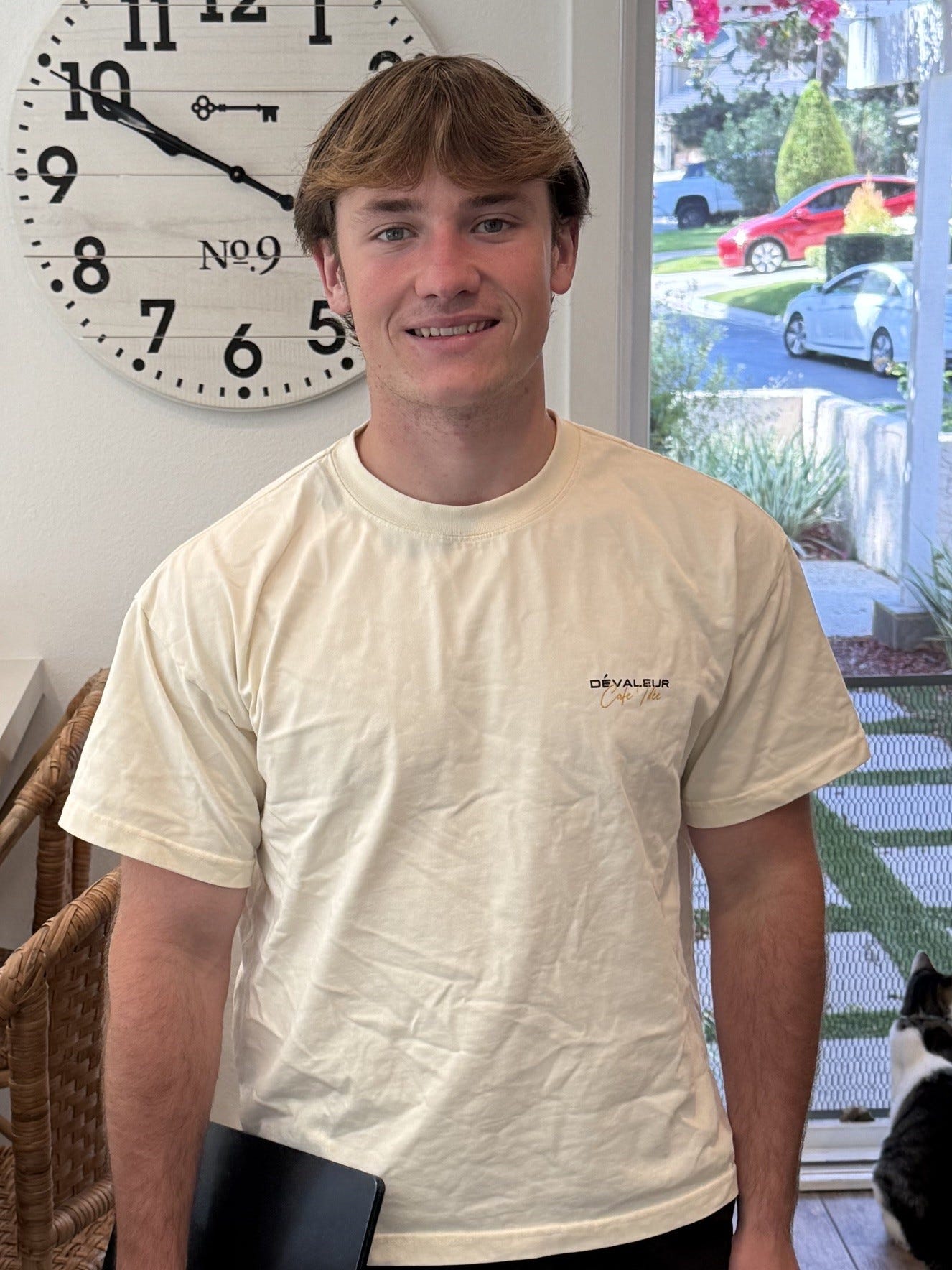
Our vehicle for getting there will be my 18-year-old son, Hank, who inspired this article.
Hank is the eldest of our three children. And guess where he’s headed this fall?
College. Specifically, the University of Washington in Seattle.
In other words, he’s the first chick leaving our nest. Any of you parents out there probably know where this is going.
Some words about Hank
Before getting to impermanence and Hank, a few words about him are necessary. Rather than throw out superlatives, I’m going to tell a story that captures his essence.
When my dad died in 2015 Hank was seven years old. After the memorial service, the family and a few close friends drove to the cemetery to place his ash-filled urn in the ground, next to my mom who’d passed away in 2009.
Those six years after my mom passed were tough for my dad. His dementia, which had begun during my mom’s final years, worsened gradually with each passing year. He would have passed much sooner if not for…
Florinda.
A godsend named Florinda
An immigrant from Guatemala, Florinda had nannied for my sister’s kids and then stayed on for several more years. Once it became clear that my parents needed full-time help, she went to work caring for them.
And what a job she did. My mom called her a godsend.
After my mom passed, Florinda showered my dad with attention. Five days a week. For six years.
When my dad died in October of 2015, it her hard. The main focus of her life for six years was gone.
The passing of the urn
So there we all were at the cemetery. About 25 of us; my brothers, sisters, the grandkids and a few others.
Hank stood next to me, holding my hand.
We passed the urn from person to person, each saying a final goodbye to Walter B. Gerken. It was somber, but everything went relatively smoothly until the urn reached Florinda…
And she started sobbing. Loudly.
Big-hearted Hank
After a few moments of this, something happened that I’ll never forget as long as I live.
Hank shook his hand free of mine.
Then he walked the fifteen feet or so over to Florinda, put his arms around her and hugged her.
Totally on his own. I didn’t nudge him. Nobody did. He just did it.
That’s Hank. He came into this world empathetic, compassionate and loving.
Why did I devote 400 words to describing Hank? To give you an idea of how hard it is for me and my wife to deal with his impending flight from our nest.
Examples of impermanence
Which brings us, finally, to impermanence. Things come, and they go. What things? Everything.
Leaves appear on trees in the spring. They grow through the summer. Turn beautiful shades in the fall…and then fall to the ground. Over and over. Every year. Century after century.
Kodak was founded in 1880 and thrived as photography took hold. The advent of digital cameras forced the company to fold in 2013. It came. It grew. It went.
Hank was born in 2008. His childhood was marked by sports, friends and a wicked sense of humor.
Funny guy Hank
Two funny stories on that last one.
His third-grade teacher told us that she asked the kids to come up with words ending in ‘light’; like flashlight, gaslight, etc. Hank thrust his hand in the air and said, “Bud Light!”
More recently, he got mad at me about something then said to me, because I supposedly look like Jeff Bezos, “Thank you, Jeff Bezos, without the money!”
And now that childhood is coming to an end. Yes, childhood, too, is impermanent.
We’re born. We grow up. Then we leave the nest.
How we deal with impermanence
So what’s the point of all this? It’s simple: The implications for how we deal with the reality of impermanence are enormous.
Let’s use Hank leaving for college as an example. One option I have is to dwell on it incessantly and cry myself to sleep every night. Not good.
The other is to accept the impermanent nature of life and see his leaving the nest as a manifestation of that. Which doesn’t mean doing cartwheels and jumping for joy that he’s leaving. That would be phony and a suppression of my true feelings.
Accepting reality
What it would mean is feeling the sadness of seeing him go, while at the same time accepting the inevitably of it. Which is what I have been doing for months and, if I’m being honest, years.
Each time I walk up our stairs and go past his room, I feel a pang of sadness knowing that in a few months he won’t be in there.
But the good thing about impermanence is that it works both ways. Because the sad feelings around Hank leaving are also impermanent. They arise, I feel them, and then they pass.
The key is that we need to allow them to pass. How? By feeling the feelings and not resisting them. Doing just that is one of the keys to our overall well-being.
The long and the short of it
What impermanence boils down to is accepting the reality of life, especially that big kahuna of them all: We’re born, we live and then we die.
I’ve found that the more spiritual work I do with meditation and mindfulness, the more okay I am with that reality. I think that’s because the more ego I shed, the greater influence my consciousness has in my life. And with that comes the sense that that consciousness, which is just energy, will live on in some capacity once my body gives out.
But no matter how conscious I’ve become, I’m sure about one thing.
My tear ducts are going to get a helluva workout in the coming months.


Impermanence, when appreciated, reminds us we're human. And, it challenges us to let go. And the older you get, the more letting go is required.
Oh man!!!! Do I ever understand. I get it all now better than I did when I bid adieu to each of my 3 kids at colleges far far away. I specifically remember having to walk away from my son John, at Georgetown, and to just keep walking because I was sobbing so hard and I knew how ready he was for it. (He stayed and works in DC 😳) Your story of Hank reminds me of my boys. Not so much my daughter. She’s the oldest and we were both ready for the distance. It’s not about them going to college, it’s about a really meaningful phase of life changing. But those of us seeking the benefits of ungrasping, begin to trust that each succeeding phase can be just as wonderful.
I loved this reminder of how healthy it is to let go. But nobody said it’s easy.